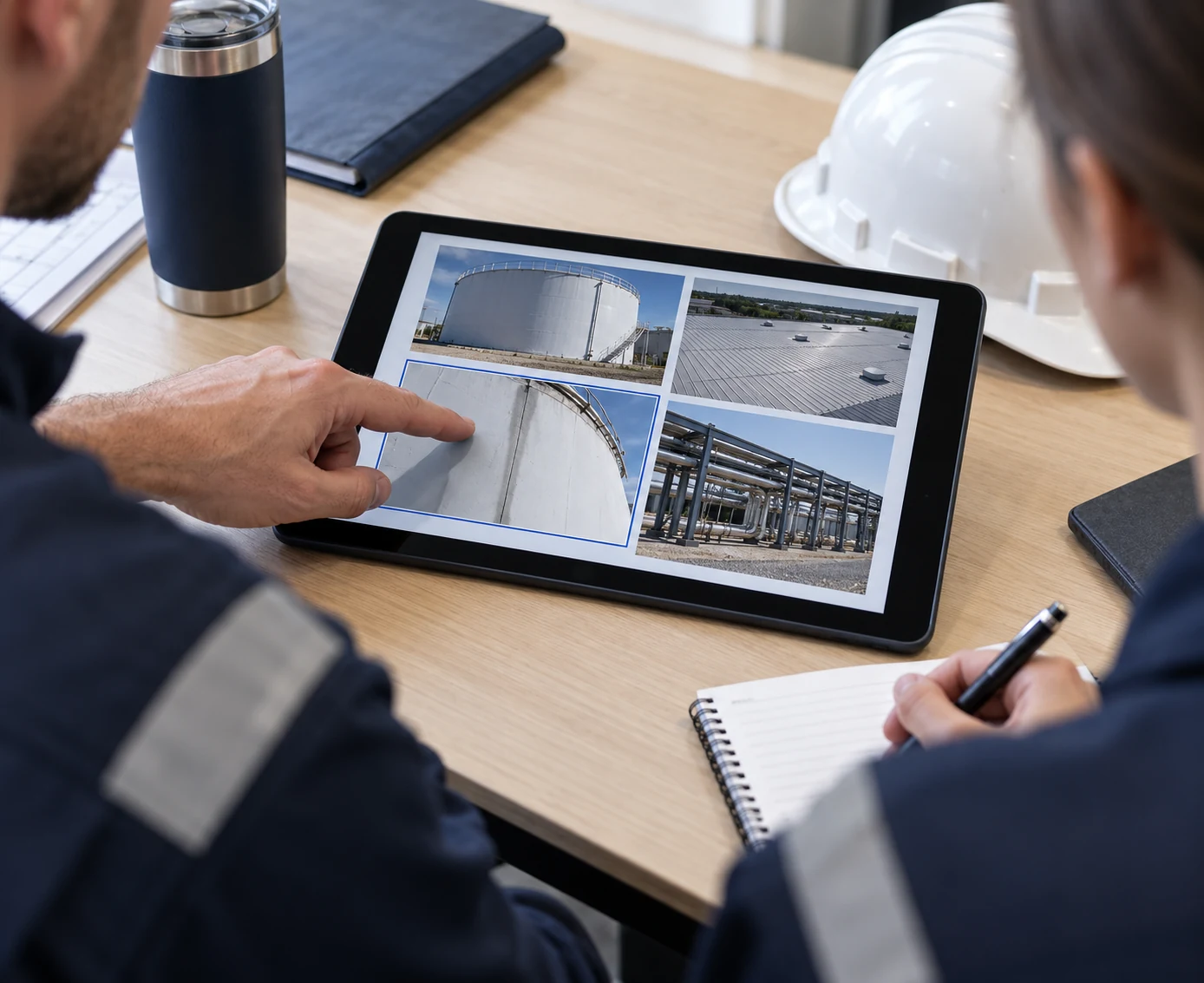


INDUSTRY
Industrial Infrastructure Inspections
Practical RPAS, thermal and visual inspection support for active industrial facilities and difficult-to-access assets.
Industrial facilities depend on electrical systems, structures and mechanical equipment that must operate reliably under demanding conditions. Heat, vibration, dust, moisture, corrosion, loading and normal equipment ageing can create defects that are not always visible during routine operations.
Helios Infrasight provides RPAS, thermal and visual inspection services for industrial infrastructure. Our work helps facility owners, operators, maintenance teams and contractors document asset condition, identify developing anomalies and plan further investigation before problems become more disruptive.
Inspection scopes are tailored to the facility, operating environment and specific maintenance objectives.

Electrical Thermography
Electrical thermography is a non-contact inspection method used to identify abnormal temperature patterns in energized equipment.
Potential industrial applications include:
- Switchgear and switchboards
- Motor control centres
- Distribution panels
- Transformers
- Disconnects and breakers
- Bus connections
- Cable terminations
- Contactors, fuses and relays
- Battery and DC systems
- Generator connections
- Electrical cabinets and control systems
- Critical power-distribution equipment
Abnormal heating may be associated with loose or deteriorated connections, increased resistance, overload, phase imbalance, component failure or inadequate cooling.
A thermal anomaly is an indicator that requires context. Equipment load, component type, temperature difference, ambient conditions and operating history should be considered before maintenance decisions are made.

RPAS Inspection of Difficult-to-Access Assets
Industrial sites often contain elevated structures, roofs, stacks, tanks, conveyors and other components that are difficult to inspect from the ground.
RPAS inspections can assist with the assessment of:
- Roofs and exterior building areas
- Towers, stacks and elevated structures
- Tanks and external tank components
- Pipe racks and support structures
- Conveyors and material-handling systems
- Cooling systems and exterior equipment
- Elevated electrical infrastructure
- Structural connections and visible deterioration
- Corrosion, coating failure and water ingress
- Storm or impact damage
Using an RPAS can reduce the need for scaffolding, lifts or rope access during the initial inspection stage. Where a defect requires hands-on examination, measurements or testing, aerial findings can help plan that work more effectively.

Visual Condition Assessment
High-resolution visual inspections can document the condition of structural, mechanical and electrical components over time.
Typical observations may include:
- Cracks and visible deformation
- Corrosion and coating breakdown
- Loose or missing hardware
- Damaged guards or enclosures
- Leaks and staining
- Insulation damage
- Surface contamination
- Weather-related deterioration
- Vegetation or debris concerns
- Access and housekeeping conditions affecting inspection or maintenance
Repeat inspections can also provide a condition record for comparing changes over time.

Risk-Based Inspection Planning
Not every component requires the same level of inspection. A risk-based approach focuses resources on equipment whose failure would have the greatest impact on safety, production, reliability or repair cost.
Inspection priorities may consider:
- Equipment criticality
- Operating load
- Failure history
- Age and condition
- Environmental exposure
- Accessibility
- Consequence of failure
- Planned shutdown schedules
- Existing maintenance findings
Helios Infrasight can work with the client’s maintenance team to define the inspection area, required technologies, reporting format and level of detail before fieldwork begins.

Qualified Personnel and Industrial Practices
Our industrial inspections are performed by Transport Canada-certified RPAS pilots with an understanding of the operational and safety requirements associated with active industrial facilities.
Before fieldwork begins, the inspection scope is reviewed in relation to site access, ongoing operations, energized equipment, restricted areas, elevated structures, moving machinery and other facility-specific hazards.
RPAS activities are coordinated with the client and conducted according to applicable regulations, site procedures and approved operational controls.
Thermal inspections are performed by personnel with appropriate infrared training and are based on recognized industrial thermography practices. Inspection conditions are evaluated carefully because measured temperatures may be affected by:
- Equipment load
- Emissivity
- Reflected apparent temperature
- Ambient temperature
- Wind and moisture
- Viewing angle
- Camera-to-component distance
- Surface condition
- Equipment design
Thermal findings are documented as observed conditions rather than unsupported diagnoses. Where additional electrical testing, mechanical inspection or engineering review is required, the report identifies the area requiring follow-up.
This practical approach combines qualified personnel, appropriate inspection technology and consistent reporting methods to provide maintenance teams with reliable information for planning further investigation and corrective work.
Reporting Designed for Maintenance Teams
Our reports are structured to help personnel understand what was observed, where it was found and what follow-up may be appropriate.
Depending on the scope, deliverables can include:
- Asset and component identification
- Visual and thermal images
- Recorded temperatures and comparison values
- Description of the observed condition
- Annotated areas of concern
- Severity or priority classification
- Recommended follow-up by qualified personnel
- Inspection summaries and finding registers
Our inspections are intended to complement established preventive-maintenance, reliability and engineering programs.