

INDUSTRY
Substations and Critical Electrical Nodes
Thermal, aerial, visual and UV/corona inspections for substations and high-value electrical infrastructure
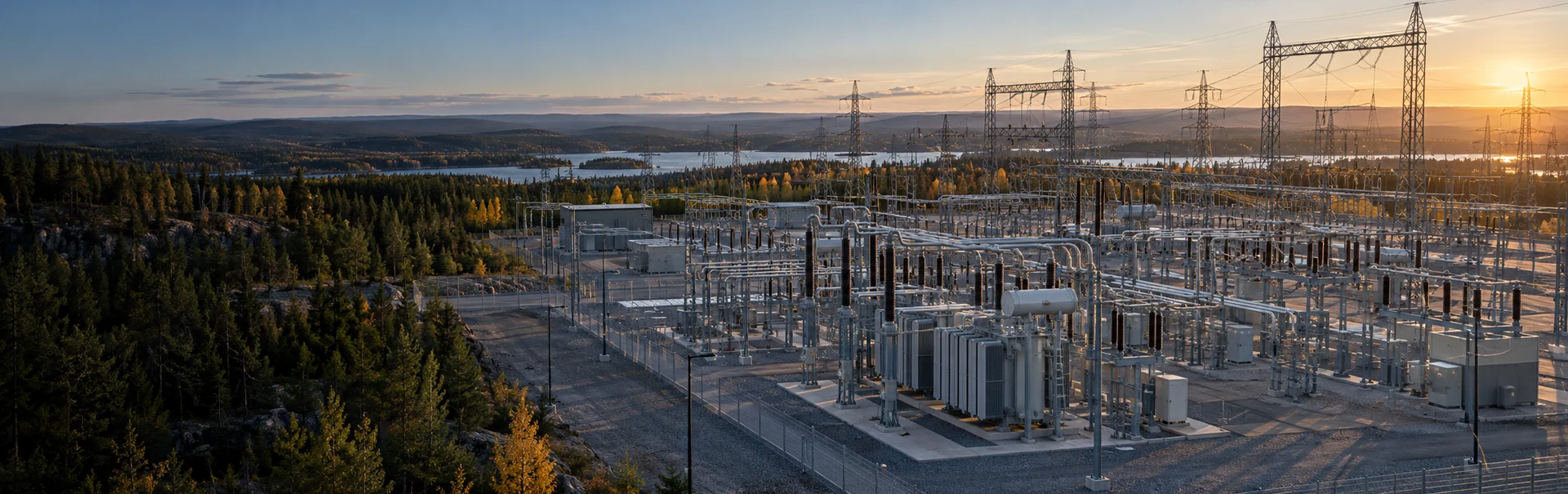
Substations and critical electrical nodes are central to the safe and reliable operation of power systems. A deteriorating connection, damaged insulator, cooling issue or developing discharge condition can affect equipment reliability and, in some cases, contribute to an unplanned outage.
Helios Infrasight provides thermal, visual, RPAS and UV/corona inspection services for substations and associated high-value electrical infrastructure. Our inspections help utilities, renewable energy operators, industrial facilities and maintenance contractors identify visible, thermal and discharge-related anomalies while equipment remains in service.
The result is a structured condition record that supports maintenance prioritization, follow-up testing and long-term asset management.
Thermal Inspection of Energized Equipment
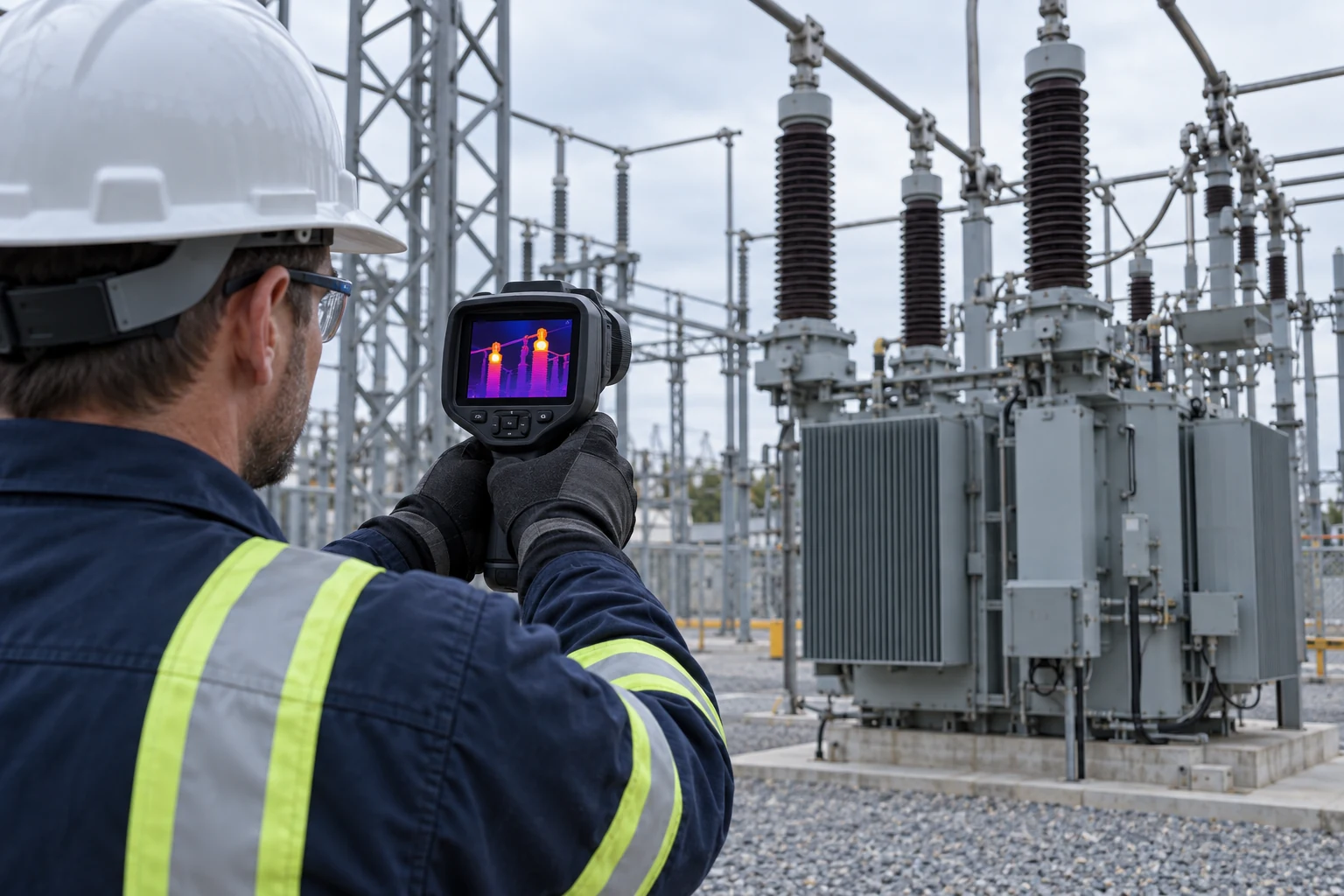
Infrared thermography can identify abnormal temperature patterns associated with increased electrical resistance, uneven loading, deteriorated connections, internal equipment problems or cooling limitations.
Depending on the site, operating conditions and inspection scope, thermal inspections may include:
- Power transformers and auxiliary transformers
- Bushings, terminals and cable connections
- Disconnect switches and associated contacts
- Circuit breakers and switchgear
- Busbars, bus connections and jumpers
- Instrument transformers
- Surge arresters
- Fuses and fuse holders
- Grounding connections where visible
- Control cabinets and auxiliary electrical systems
- Battery systems and accessible DC equipment
Thermal findings must be interpreted in context. Equipment loading, phase comparison, ambient conditions, reflected temperature, wind, solar loading, distance and viewing angle can all influence the apparent temperature of a component.
For this reason, our reports record relevant inspection conditions and distinguish between measured observations and conclusions that require further electrical investigation.
Visual and RPAS Inspection
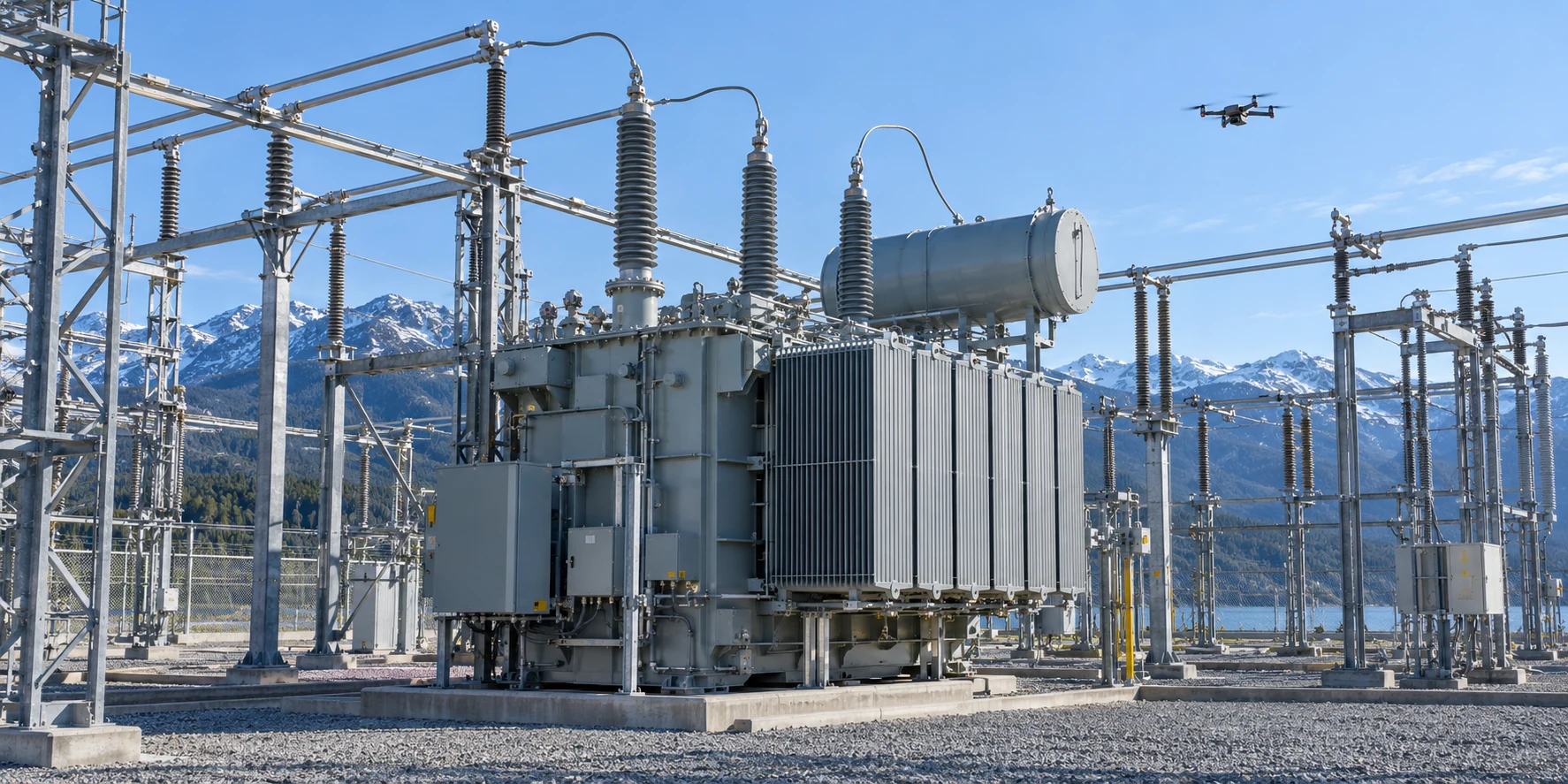
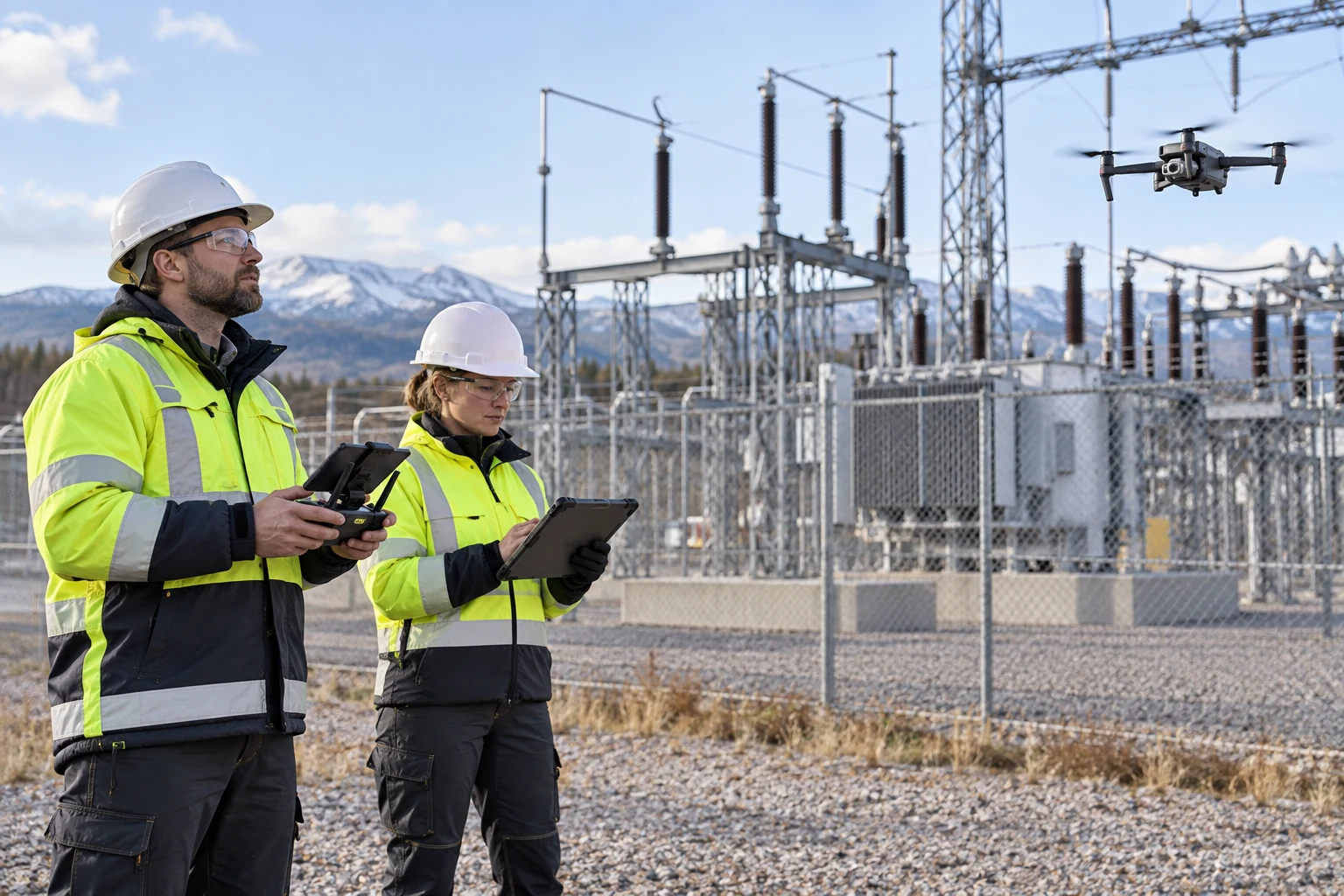
Some substation components are elevated, difficult to access or positioned where a ground-level view is limited. RPAS imagery can provide additional perspectives while reducing unnecessary exposure to energized equipment and limiting the need for specialized access equipment during the initial inspection stage.
Visual and aerial inspections can support the assessment of:
- Insulators and bushings
- Conductors, jumpers and connectors
- Bus structures and support hardware
- Transformer exteriors and radiators
- Oil leaks and visible contamination
- Corrosion, loose hardware and damaged components
- Animal nesting or foreign material
- Fencing, structures and selected site conditions
- Elevated equipment that cannot be examined adequately from the ground
RPAS operations within or near substations require careful planning because of electrical hazards, restricted clearances, electromagnetic considerations and site-specific operating requirements. Every mission is evaluated according to the actual facility layout, asset configuration and risk conditions.
UV and Corona Detection
Electrical discharge activity may occur before significant heat or visible damage develops. UV/corona inspection can provide an additional condition-monitoring method for selected high-voltage components.
Potential applications include the inspection of:
- Insulators and bushings
- Conductors and connectors
- Switches and bus components
- Terminations and high-voltage fittings
- Areas of possible surface discharge
- Components affected by contamination, deterioration or installation defects
UV findings are interpreted in relation to component type, voltage level, environmental conditions, contamination and possible discharge location. Where appropriate, corona observations can be documented alongside thermal and visual evidence to provide a more complete picture of component condition.
Qualified Personnel for Electrical Environments
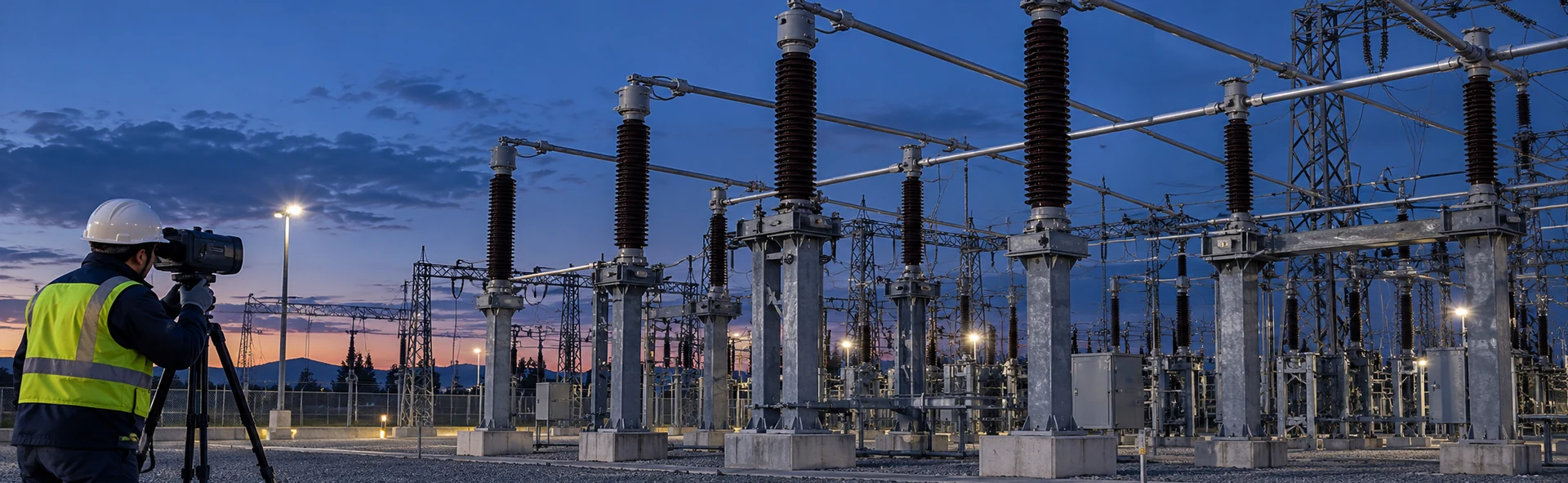
Substation inspections are conducted by Transport Canada-certified RPAS pilots using mission plans developed for energized electrical environments.
Operations are coordinated with site personnel and performed according to applicable RPAS regulations, facility procedures, safe approach requirements and site-specific electrical hazards.
Our personnel apply appropriate infrared training and recognized industrial thermography practices when inspecting energized equipment. Thermal observations are evaluated with consideration for:
- Equipment loading
- Phase-to-phase comparison
- Ambient and reflected temperatures
- Wind and solar loading
- Emissivity
- Inspection distance
- Viewing angle
- Equipment design
- Operating condition
These factors are documented because a thermal image alone may not provide enough information to determine the cause or severity of an anomaly.
Our role is to collect accurate field evidence, identify abnormal conditions and provide organized information for maintenance personnel, qualified electrical workers and engineers responsible for determining the required corrective action.
Clear and Structured Reporting
A useful substation inspection report should allow maintenance personnel to locate the component, understand the observation and determine the next appropriate step.
Our deliverables can include:
- Equipment tag and component identification
- Visual, thermal and UV imagery
- Phase designation where applicable
- Maximum and reference temperatures
- Recorded temperature difference
- Description of the observed condition
- Severity or priority classification
- Recommended follow-up for qualified review
- Summary tables for maintenance planning
Helios Infrasight does not replace engineering analysis, protection testing or intrusive electrical diagnostics. We provide accurate field observations and organized evidence that support those activities.